
Reference PV–battery–diesel storage configuration.
← Wind · Solar · StorageSYSTEMS / BATTERY STORAGE
Store power for the hours that matter.
Storage helps align renewable generation with actual demand. Cabinet and container formats can serve different site sizes; battery capacity, power electronics and controls are selected together.
Discuss storage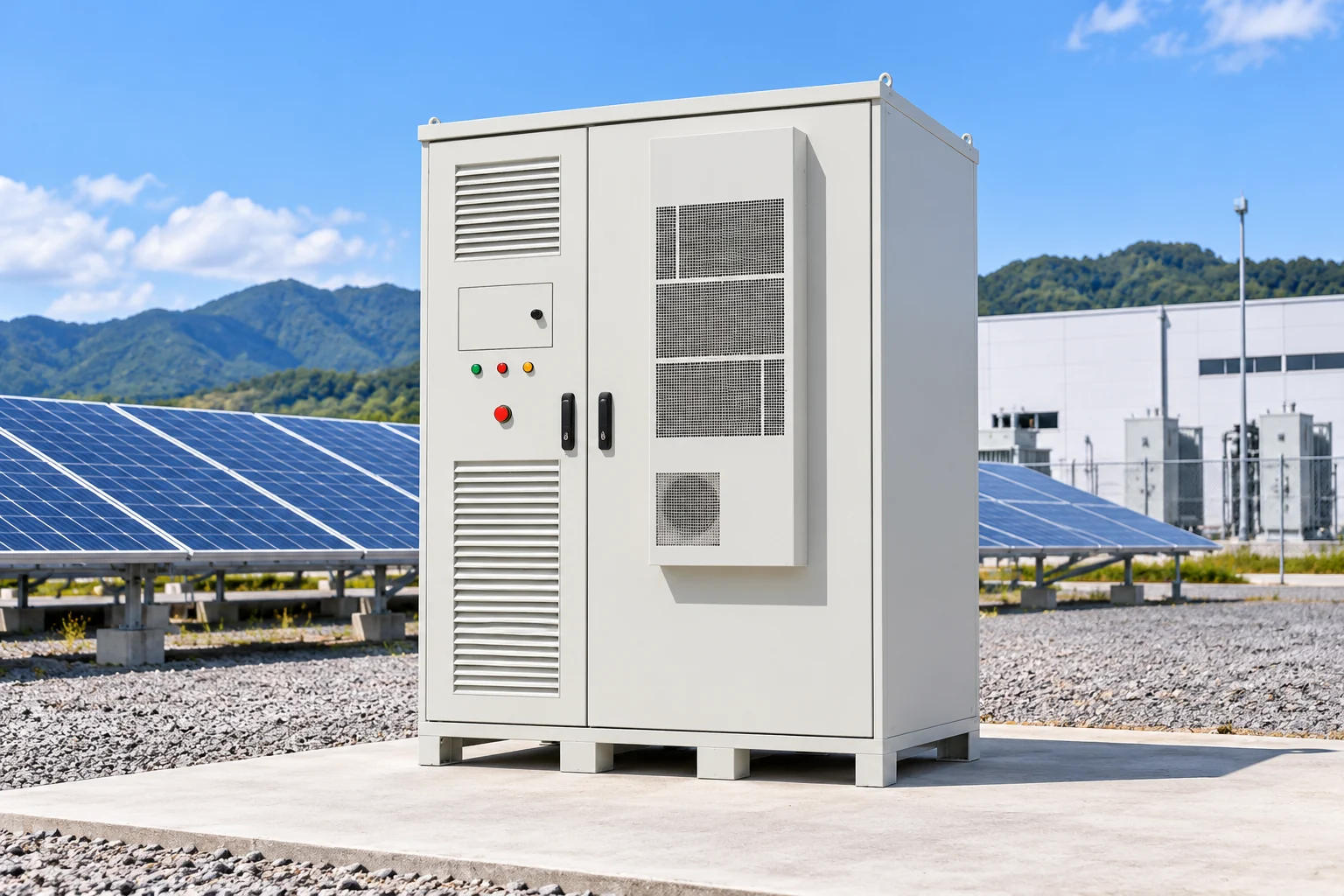
CATALOGUE REFERENCE
Cabinet sizes to start the discussion.
Examples from the supplied storage-cabinet catalogue show the range of power and energy combinations. These are reference configurations, not a fixed product promise; final specifications are confirmed for the project.
Reference air-cooled storage cabinet.
Reference liquid-cooled storage cabinet.
Rated values above are catalogue examples. Quoted equipment, operating limits and options must be checked against current product documents and the site design.
LARGER PROJECTS
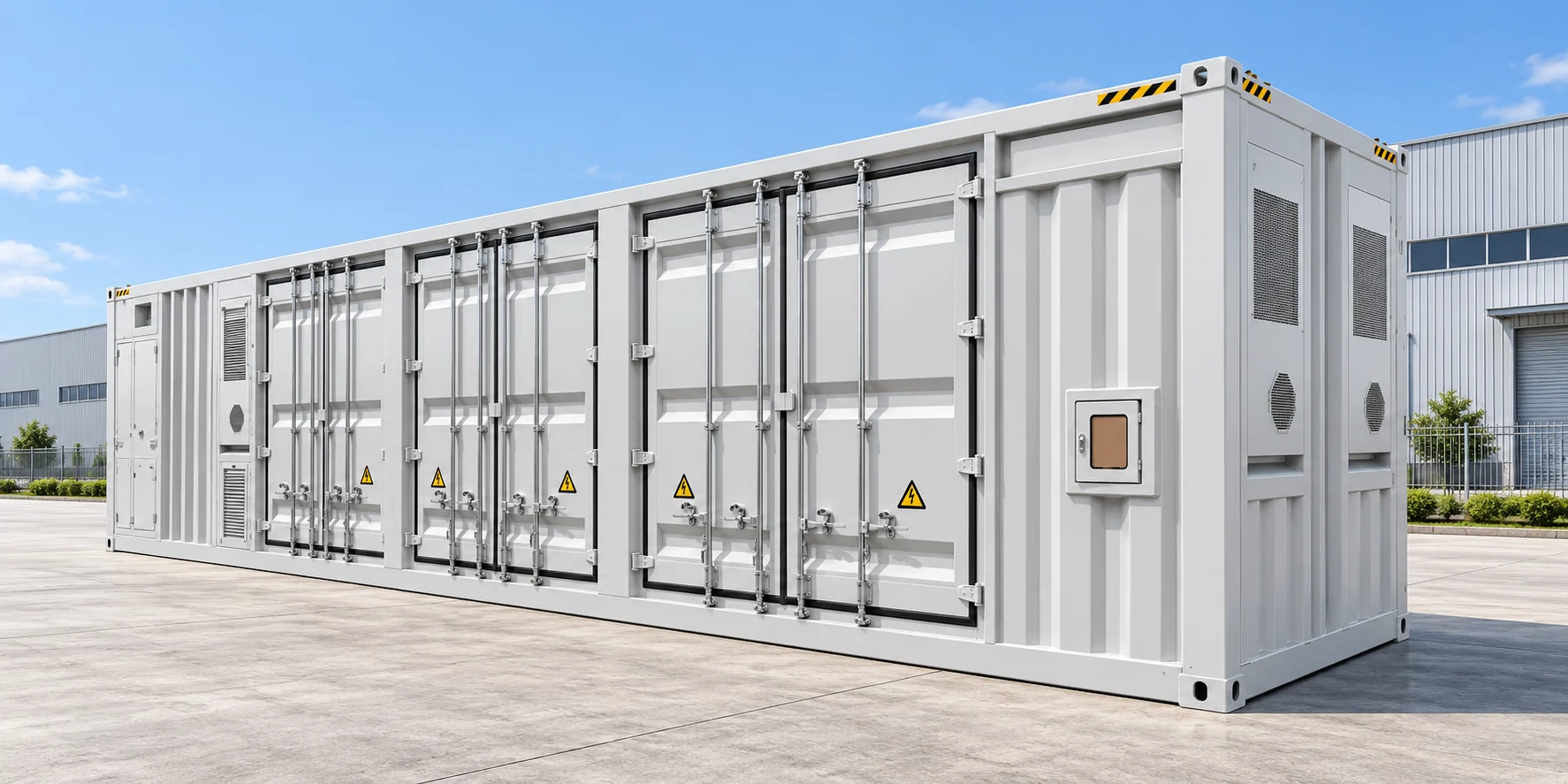
From cabinet to container.
Containerized storage offers a different format for larger industrial and microgrid projects. The supplied materials also show air-cooled and liquid-cooled cabinets, optional PV integration and energy-management equipment.
For wind integration, the turbine controller, inverter interface, load and required autonomy must be reviewed together before specifying a battery system.
Discuss your load profileWHERE STORAGE MAY FIT
Plan around the load and grid conditions.
01 / INDUSTRIALOn-site energy use
Compare daily demand, renewable generation and tariff periods when considering a commercial storage system.
02 / WEAK GRIDSupply continuity
Review the critical loads, available grid supply and required backup time before sizing a battery.
03 / REMOTEHybrid microgrids
Combine site-appropriate wind, PV and storage with the controls needed for off-grid operation.
Application types are planning references, not claims about completed Easysail projects or guaranteed savings.